EN
EN
 jp
jp  ko
ko  es
es  ru
ru  pt
pt  th
th  ar
ar  vi
vi  id
id  kk
kk 
Construction
Build Better, Build Greener, with Celix HPMC

In the highly competitive liquid detergent and home care market, product texture and stability are just as important as cleaning power. If a laundry detergent is too watery, visually separates in storage, or fails to foam properly, consumers will perceive it as low quality.
This is exactly why Hydroxypropyl Methylcellulose (HPMC) has become a staple ingredient for modern chemical formulators.
As a versatile, non-ionic cellulose ether, industrial grade HPMC acts as much more than a simple thickener. Whether you are a sourcing manager or a detergent factory owner, understanding the technical role of bulk HPMC powder in day-to-day chemical formulations is key to reducing costs and upgrading your product line.
Here is the comprehensive scientific and commercial breakdown of why HPMC is widely used in detergent industries.
The primary answer to why HPMC uses in detergent lies in its incredible thickening efficiency.
Viscosity Building:HPMC creates a stable, polymer-network structure when dissolved in water, giving liquid detergents, hand soaps, and dishwashing liquids that premium, thick, and smooth pouring texture.
Pseudoplastic Behavior (Shear-Thinning):HPMC solutions exhibit excellent rheological properties. When a consumer squeezes a dish soap bottle (high shear), the liquid flows out smoothly. When the pouring stops (low shear), it instantly regains its thick viscosity, preventing messy drips around the bottle cap.
This is the hidden superpower of HPMC that global brands leverage to market "stain-protection" or "anti-graying" properties.
During a wash cycle, surfactants lift dirt, oil, and grime off the clothing fabric. However, that suspended dirt naturally wants to resettle back onto the clean clothes.
The HPMC Shield:HPMC carries a specific non-ionic charge and hydration layer that wraps around the suspended soil particles and forms a protective barrier on the fabric fibers.
The Result:It prevents soil redeposition, ensuring that dirt is rinsed away down the drain rather than trapping back onto the textiles. This keeps whites whiter and colors brighter over multiple washes.
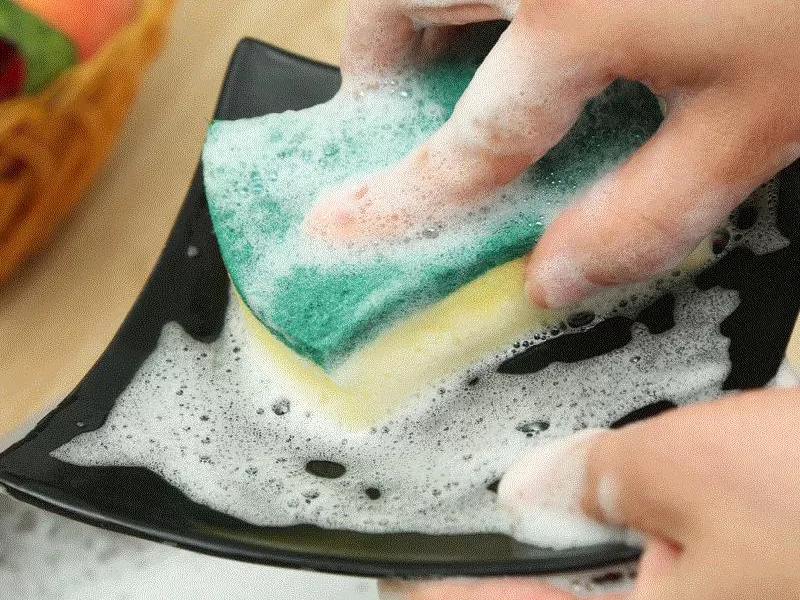
Many traditional thickeners (like carbomer or certain natural gums) react poorly when mixed with high concentrations of anionic surfactants, salts, or active enzymes, causing the liquid detergent to turn cloudy, clump, or split into layers.
Non-Ionic Stability:Because HPMC is non-ionic, it does not react with charged ionic surfactants (such as SLES, LABSA, or LAS).
Phase Separation Prevention:It maintains excellent chemical stability across a wide pH range (3.0-11.0), ensuring that your liquid detergent remains perfectly homogenous, clear, and shelf-stable for 1 to 2 years without phase separation.
While surfactants generate foam, HPMC acts as a foam stabilizer. It increases the film elasticity of the liquid surrounding the bubbles, making the lather richer, creamier, and longer-lasting. In hand soaps and body washes, it also acts as a mild film-forming conditioner, leaving a soft, non-sticky feeling on the skin after washing.
To help your R&D team visualize the dosage benefits, here is a quick breakdown of HPMC application in home care products:
Detergent Product Type | Main Role of HPMC | Technical Benefit |
Liquid Laundry Detergent | Anti-redeposition & Thickening | Prevents graying of clothes; creates premium pouring texture. |
Dishwashing Liquid | Rheology control & Foam stabilizing | High-viscosity retention in salt formulations; rich lather. |
Liquid Hand Soap / Body Wash | Skin conditioning & Thickener | Smooth skin feel; excellent clarity and transparency. |
Car Wash Shampoo | Skin conditioning & Thickener | Keeps specialized cleaning beads suspended; anti-scratch slip. |
Not all HPMC grades are created equal. Sourcing standard construction-grade HPMC for a cosmetic or detergent formula can ruin transparency and cause heavy sedimentation. When auditing an HPMC manufacturer, verify these three benchmarks:
Transmittance (Clarity):For clear liquid soaps, specify an HPMC grade with a transmittance rating of ≥80%-85% to ensure the final product is crystal clear.
Instant Dissolution (Cold-Water Dispersible):Ensure the supplier provides surface-treated (delayed-hydration) HPMC. This allows the powder to disperse in cold water without forming dry, un-dissolved lumps, drastically cutting down blending times in your factory.
Low Ash Content:High-purity chemical processing keeps ash content below 5%, ensuring your formulation doesn't turn hazy over time.
Understanding why HPMC uses in detergent gives chemical manufacturers a clear edge in product performance and cost-efficiency. By acting as a thickener, stabilizer, and anti-redeposition agent all at once, it simplifies your raw material inventory.
Partner with a Verified Tier-1 HPMC Factory--https://wa.me/8618330106777
At Celix Cellulose, we operate advanced automated DCS production lines with an annual export capacity of 30,000 tons, supplying consistently high-purity detergent-grade HPMC to over 150 countries. We offer specialized instant-dispersible series with ultra-high transparency tailored for liquid detergents and personal care products.
Build Better, Build Greener, with Celix HPMC
Clean Safer, Care Smarter, with Celix Cellulose Ether

Drill Deeper, Operate Safer, with Celix Cellulose Ether

Formulate Precisely, Deliver Safely, with Celix Cellulose Ether

Taste Better, Keep Fresher, with Celix Cellulose Ether

Shape Stronger, Fire Smarter, with Celix Cellulose Ether
Contact Us

Celix Cellulose Co., Ltd, is an integrated chemical cellulose manufacturer with in-house R&D, factories, and global sales sites.
Our products include HPMC, HEC, MHEC, VAE RDP, PCE, PVA, Defoamers, PP fibers, HPS, SHP and Gypsum Retarder.


Celix Cellulose Co., Ltd, is an integrated chemical cellulose manufacturer with in-house R&D, factories, and global sales sites.
Our products include HPMC, HEC, MHEC, VAE RDP, PCE, PVA, Defoamers, PP fibers, HPS, SHP and Gypsum Retarder.
Quick Links
+8618330106777
info@celixcellulose.com