EN
EN
 jp
jp  ko
ko  es
es  ru
ru  pt
pt  th
th  ar
ar  vi
vi  id
id  kk
kk 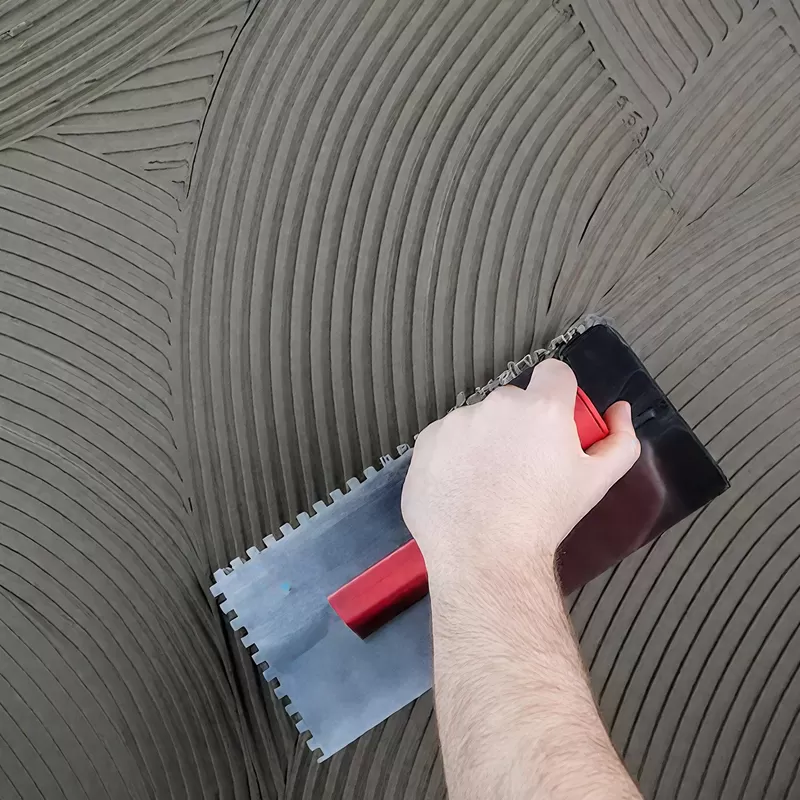
Construction
Build Better, Build Greener, with Celix HPMC

Last updated: January 30, 2026
Author: Celix Technical Team (Hebei Celix Cellulose Co., Ltd.)
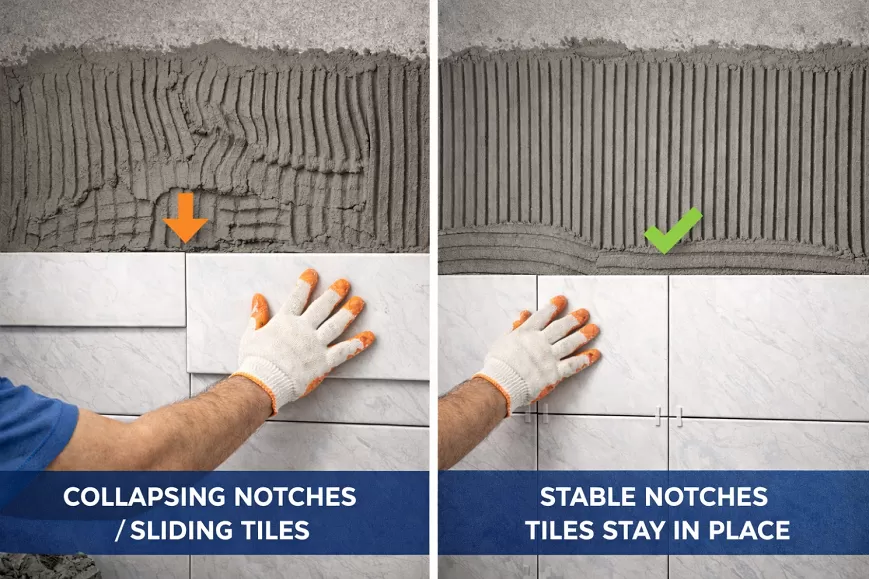
If tiles slip on a vertical wall, it’s rarely “one ingredient.” Most of the time it’s a system issue: rheology (flow behavior), water management, mixing dispersion, and how the product is used on site.
Seeing tiles slip after application is frustrating—especially when the formula looks “fine.” This guide is here to help manufacturers, QC teams, and distributors pinpoint what’s really happening and make the right adjustments, instead of changing three things at once and hoping it works.
About Celix: Celix (Hebei Celix Cellulose Co., Ltd.) supplies cellulose ether additives for dry-mix construction materials, including HPMC solutions designed for tile adhesive performance.
Inquire Now: Describe your tile sagging issues.
Request Samples: HPMC / Modified HPMC for Tile Adhesive.
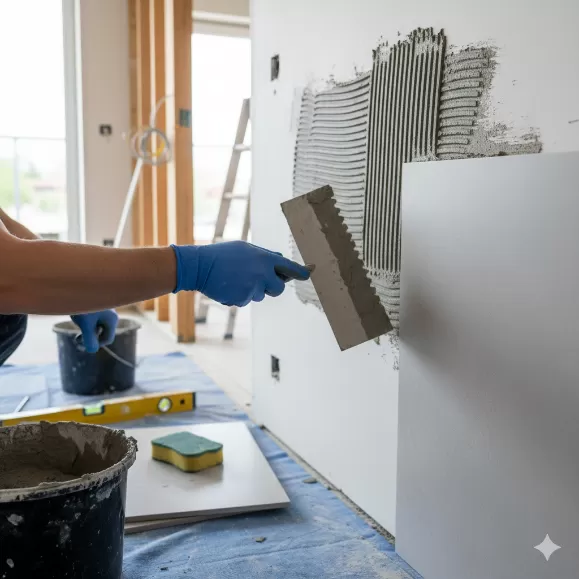
“Anti-sagging” (also called slip resistance) is the adhesive’s ability to:
· Hold trowel ridges on a vertical wall
· Support tile weight after placement
· Maintain structure at rest, while still being easy to spread during troweling
A good wall adhesive typically needs:
· Enough yield stress (resistance to flow when not being worked)
· Good thixotropy (easy under shear, fast rebuild after shear stops)
· Strong water retention (prevents early drying and weak structure)
· A stable powder framework (cement + fillers + additives in balance)
Where HPMC fits
In tile adhesive systems, HPMC contributes to:
· Water retention → supports open time and consistent bonding
· Viscosity and structure → improves ridge stability
· Workability → smoother troweling and better application window
However, if dispersion, filler grading, or total formulation balance is off, HPMC alone cannot “rescue” the product. That’s why we troubleshoot in a structured way.
Cause A — HPMC grade selection doesn’t match wall anti-sag needs
Typical symptoms
· The mix feels “creamy” and slowly flows after troweling
· Ridges slump quickly even though viscosity seems “okay”
· Tile slip occurs within the first minutes after placement
Why it happens
Not all HPMC grades behave the same in thixotropy and structure rebuild. A grade optimized mainly for general thickening may not provide the best wall slip resistance.
Fix
· Use an HPMC option designed for tile adhesive anti-sagging performance, not only for thickening.
· If you sell multiple classes (wall vs floor, C1 vs C2), avoid a “one-grade-fits-all” approach.
What to test
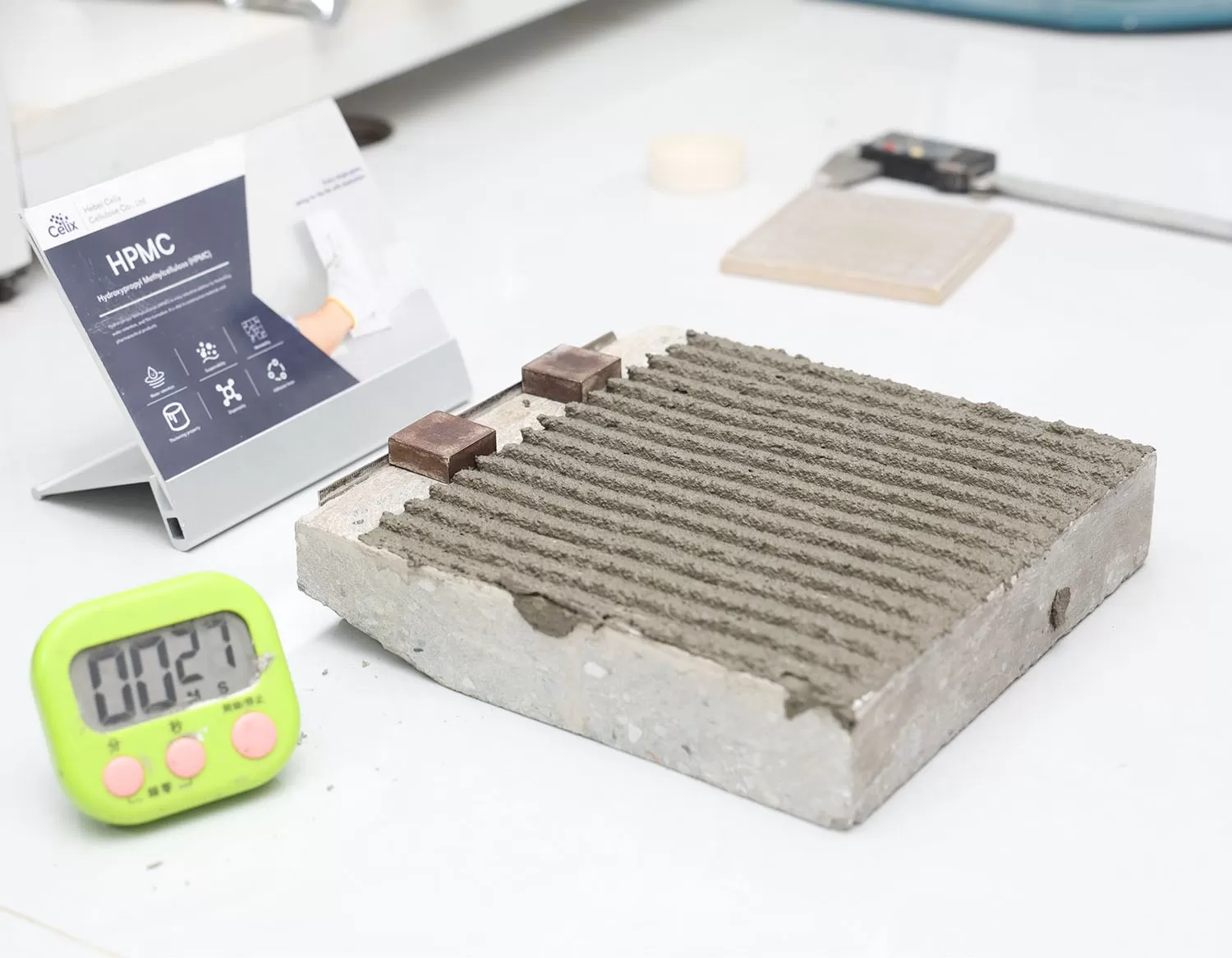
· Ridge standing time on wall (visual + timed)
· Tile slip distance under a consistent load/condition
Cause B — HPMC dosage is not optimized (too low or “wrong kind of high”)
Typical symptoms
· Too low: ridges collapse; tile slips easily
· Too high (or incompatible): sticky/ropey feel, poor troweling, yet sagging still remains
Fix
· Change dosage in a small, controlled range (one change at a time).
· If higher dosage increases stickiness but doesn’t improve anti-sagging, the real issue is likely grade selection, dispersion, or powder framework, not dosage.
Operator-friendly tip
Stop adjusting after every trial. Run a simple test matrix (baseline → dosage change → grade change) so your team learns what actually moves the result.
Cause C — Dispersion and dry-mix uniformity problems (HPMC not evenly distributed)
Typical symptoms
· Occasional fish-eyes, lumps, or gel particles
· Batch-to-batch inconsistency: “same formula, different wall behavior”
· Sagging varies by production day or shift
Why it happens
In dry-mix production, HPMC performance depends heavily on how well it is distributed. Mixing time, loading rate, mixer type, and raw material moisture can change dispersion quality.
Fix
· Verify consistent mixing protocol and mixing time.
· Check raw material moisture (especially fine powders).
· Confirm you’re not adding lightweight additives in a way that causes segregation.
Quick diagnostic :If viscosity and workability vary significantly between batches, solve dispersion first before changing formula.
Cause D — Filler grading / powder framework is unbalanced
Typical symptoms
· Adhesive looks fine in the lab but slumps on vertical application
· Slight HPMC increases do not noticeably improve ridge stability
Why it happens
Anti-sagging is not only about “higher viscosity.” It also depends on the powder framework (cement + filler particle packing). Poor grading can create a structure that collapses under tile weight.
Fix
· Review filler particle size distribution and powder flow behavior.
· Evaluate cement/filler ratio and filler fineness blend.
· Avoid changing multiple raw materials at once—your test loses meaning.
Cause E — RDP and other additives shift rheology (compatibility and balance)
Typical symptoms
· Good adhesion but poor ridge stability
· Product is sensitive to temperature/humidity changes
Fix
· Check compatibility and balance between HPMC and RDP (VAE).
· Trial one variable at a time (don’t change HPMC, RDP, and filler together).
· If necessary, use a dedicated rheology strategy depending on your product positioning.
Important
Avoid chasing a single indicator. Anti-sagging is the outcome of the system, not one number.
Cause F — On-site factors (water addition and application conditions)
Even a good formulation can sag if:
· Water addition is too high
· Substrate is too smooth/dusty or absorbs water unevenly
· Temperature is high and working time changes
· Tile size/weight exceeds the intended product class
Fix
· Provide clear water ratio and application guidance on packaging and TDS.
· Validate wall slip performance in product qualification tests.
Step 1 — Define the symptom
· Is it ridge slumping, tile slip, or both?
· Does it happen consistently or only in some batches?
Step 2 — Lock the process
Keep constant:
· Mixer type and mixing time
· Water ratio (for wet tests)
· Same raw material lots where possible
Step 3 — Run a minimal test matrix (one change per trial)
1. Baseline: current HPMC grade + current dosage
2. Same grade + dosage adjustment
3. Alternative HPMC grade designed for tile adhesive anti-sag + baseline dosage
Step 4 — Measure practical performance (not just “feel”)
· Ridge standing time on wall
· Tile slip distance after placement
· Troweling feel / workability
· Open time / adjustment time
· HPMC grade recommendation for your class (wall/floor, C1/C2)
· A sample testing plan (small trial → scale-up validation)
· A QC checklist to improve batch consistency
To get a precise recommendation, send us:
· Your target application (wall/floor, C1/C2)
· Typical formulation range (cement/filler/RDP)
· Which performance you prioritize (anti-sag/open time/workability)
Q1: Can I fix sagging simply by increasing HPMC dosage?
Not always. If dispersion, filler packing, or HPMC grade selection is the real issue, increasing dosage can create stickiness without improving slip resistance.
Q2: What’s the fastest way to confirm whether HPMC is the main cause?
Run a controlled comparison: keep the base formulation constant and test an alternative HPMC grade designed for tile adhesive anti-sag.
Q3: Why does sagging vary between batches?
Most common causes are inconsistent mixing/dispersion, raw material moisture variation, or shifts in filler grading.
Build Better, Build Greener, with Celix HPMC
Clean Safer, Care Smarter, with Celix Cellulose Ether

Drill Deeper, Operate Safer, with Celix Cellulose Ether

Formulate Precisely, Deliver Safely, with Celix Cellulose Ether

Taste Better, Keep Fresher, with Celix Cellulose Ether

Shape Stronger, Fire Smarter, with Celix Cellulose Ether
Contact Us

Celix Cellulose Co., Ltd, is an integrated chemical cellulose manufacturer with in-house R&D, factories, and global sales sites.
Our products include HPMC, HEC, MHEC, VAE RDP, PCE, PVA, Defoamers, PP fibers, HPS, SHP and Gypsum Retarder.


Celix Cellulose Co., Ltd, is an integrated chemical cellulose manufacturer with in-house R&D, factories, and global sales sites.
Our products include HPMC, HEC, MHEC, VAE RDP, PCE, PVA, Defoamers, PP fibers, HPS, SHP and Gypsum Retarder.
Quick Links
+8618330106777
info@celixcellulose.com