EN
EN
 jp
jp  ko
ko  es
es  ru
ru  pt
pt  th
th  ar
ar  vi
vi  id
id  kk
kk 
Construction
Build Better, Build Greener, with Celix HPMC

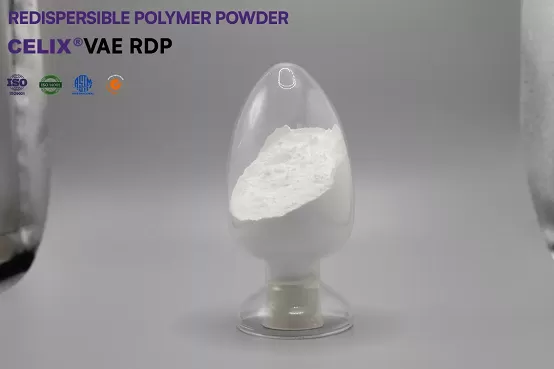
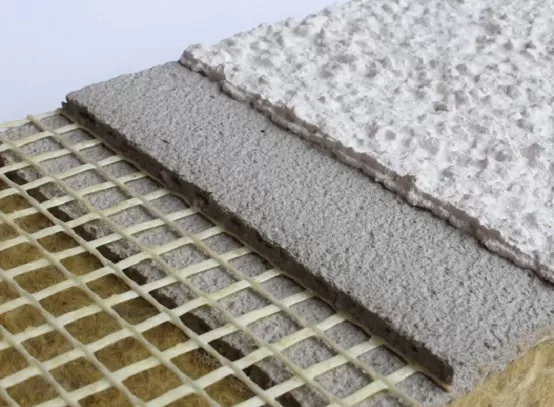
In the world of external wall construction, an EIFS (External Insulation and Finish System) is only as good as its resistance to the elements. I have seen countless projects where the base coat begins to show "hairline cracks" within the first two years. These cracks aren't just an eyesore; they allow water to penetrate the insulation layer, leading to system failure and costly repairs. At Celix Cellulose, we know that the secret to a crack-free facade isn't just more cement—it is the correct dosage of high-performance VAE RDP .
External walls are under constant attack from temperature fluctuations. During the day, the sun heats the facade; at night, it cools rapidly. This creates intense thermal expansion and contraction. Unlike traditional brick walls, EIFS uses lightweight insulation boards (EPS or XPS) that move differently from the mortar covering them.
Without a flexible additive, the rigid cement mortar cannot handle this movement and eventually snaps. This is where Redispersible Polymer plays its most vital role. It bridges the gap between the rigid cement and the flexible insulation board, absorbing the stress that would otherwise cause a crack.
At Celix Cellulose, we describe RDP as the "elastic skeleton" of the mortar. Once the mortar is mixed and applied, the polymer powder redisperses into an emulsion. As the water evaporates, this emulsion forms a continuous, rubber-like film throughout the cement matrix.
This film gives the mortar Deformability. In an EIFS base coat, this means the render can "stretch" slightly to accommodate the movement of the insulation boards. When combined with Celix HPMC (which ensures the cement has enough water to hydrate properly), our RDP creates a system that is both strong and incredibly resilient.
Beyond thermal stress, an external wall must survive physical impact—from hail to accidental bumps. A brittle mortar will shatter upon impact. However, a mortar modified with Celix VAE RDP exhibits much higher energy absorption.
Adhesion is equally critical. Standard cement has a very poor grip on smooth EPS or XPS boards. Our RDP is engineered to provide high-tenacity bonding strength to these difficult substrates. By ensuring the base coat and the insulation board act as a single unit, we eliminate the risk of delamination, even in high-wind coastal environments.
In the B2B export market, consistency is the foundation of trust. We know that in a 50-story building project, a single bad batch of polymer can be a disaster. That is why Celix Industrial utilizes automated process control in our spray-drying towers.
We carefully manage the glass transition temperature of our polymer to ensure it forms a stable film even in cooler climates. Our batch homogenization process ensures that every bag provides the same level of flexibility and impact resistance. When you choose Celix, you are buying the engineering certainty required to protect your architectural reputation for decades.
Don't let rigid formulas lead to cracked walls. Partner with the technical experts at Celix Cellulose to find the precise RDP dosage for your EIFS or ETICS application. We provide the flexibility that stands the test of time.
Get a Technical Quote for EIFS Additives
Build Better, Build Greener, with Celix HPMC

Clean Safer, Care Smarter, with Celix Cellulose Ether

Drill Deeper, Operate Safer, with Celix Cellulose Ether

Formulate Precisely, Deliver Safely, with Celix Cellulose Ether

Taste Better, Keep Fresher, with Celix Cellulose Ether

Shape Stronger, Fire Smarter, with Celix Cellulose Ether
Contact Us

Celix Cellulose Co., Ltd, is an integrated chemical cellulose manufacturer with in-house R&D, factories, and global sales sites.
Our products include HPMC, HEC, MHEC, VAE RDP, PCE, PVA, Defoamers, PP fibers, HPS, SHP and Gypsum Retarder.


Celix Cellulose Co., Ltd, is an integrated chemical cellulose manufacturer with in-house R&D, factories, and global sales sites.
Our products include HPMC, HEC, MHEC, VAE RDP, PCE, PVA, Defoamers, PP fibers, HPS, SHP and Gypsum Retarder.
Quick Links
+8618330106777
info@celixcellulose.com