EN
 jp
 ko
 es
 ru
 pt
 th
 ar
 vi
 id
 kk
Construction
Build Better, Build Greener, with Celix HPMC

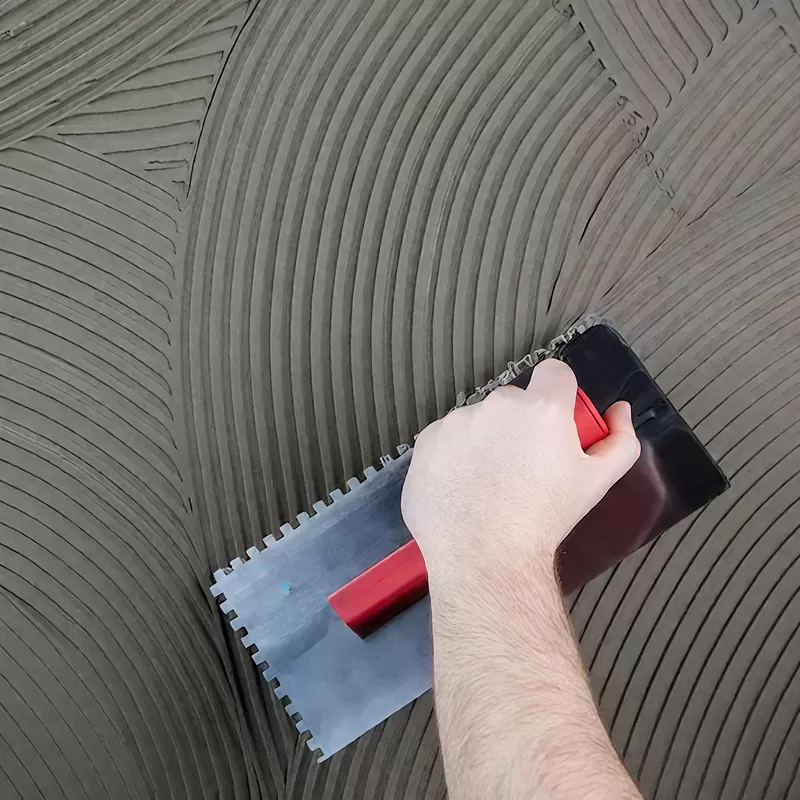
In modern dry-mix construction chemistry, achieving the ideal balance between wet-state workability and cured-state mechanical durability is the ultimate challenge for formulation engineers. Whether engineering high-performance tile adhesive C2TE, C2TES1 flexible tile adhesives, exterior skim coats, or masonry plastering mortars, two core polymer additives govern performance: Hydroxypropyl Methylcellulose (HPMC) and Redispersible Polymer Powder (VAE RDP).
While construction grade HPMC acts as the primary water retention agent, rheology modifier, and anti-sagging additive, VAE RDP provides the cured polymer film network necessary for tensile adhesion, flexural elasticity, and impact resistance. However, treating these additives in isolation—or overdosing one to compensate for the other—frequently leads to skyrocketing raw material costs, excessive air entrainment, and compromised bond strength.
For dry-mix R&D chemists and plant formulators, mastering the synergistic mechanism between HPMC and RDP is the secret to optimizing batch costs while meeting strict ISO 13007 / EN 12004 standards. This technical guide breaks down their dual hardening mechanics, reveals the "Golden Ratio" for C1/C2 tile adhesives and plastering mortars, and highlights costly formulation pitfalls to avoid.
When water is added to a dry-mix mortar on the jobsite, hydroxypropyl methylcellulose and redispersible polymer powder execute a sequential, interdependent chemical and physical sequence during wet mixing, open time, and hydraulic curing.
Immediately upon mixing, non-ionic hpmc cellulose ether hydrates via hydrogen bonding along its hydrophilic hydroxyl (-OH) and hydroxypropyl (-OCH2CH(OH)CH3) substituent groups.
Sustaining Hydration: By trapping free water within the capillary network, HPMC polymer prevents rapid moisture loss into porous concrete blocks, AAC bricks, or dry substrates.
Protecting RDP Dispersion: Without sufficient mortar water retention from HPMC, the water evaporates or drains before the VAE RDP particles can fully redisperse and coalesce, leaving un-activated polymer powder trapped inside a weak, chalky cement matrix.
Once HPMC secures the aqueous environment, vinyl acetate-ethylene redispersible polymer powder (VAE RDP) disperses into primary emulsion droplets.
As cement clinker minerals (C3S,C2S) hydrate into rigid, needle-like Calcium Silicate Hydrate (C-S-H) crystals, ambient evaporation gradually draws water out of the capillaries.
Under capillary pressure, the dispersed VAE polymer spheres pack tightly against the C-S-H gel and fuse into a continuous, elastic 3D polymer film web. This interpenetrating polymer-cement co-matrix bridges micro-cracks and anchors the mortar to non-porous vitrified porcelain tiles.
Finding the optimal dosage ratio depends on substrate porosity, tile size, ambient climate, and target performance classifications. Below are benchmark formulation ratios developed by the application laboratory at Hebei Celix Cellulose Co., Ltd. (Celix):
Dry-Mix Mortar Category | Celix Cellulose Ether Grade & Viscosity | HPMC Dosage (% w/w) | Celix VAE RDP Dosage (% w/w) | Key Mechanical & Application Targets |
C1 Standard Tile Adhesive | Celix HPMC 100,000 mPa.s | 0.25%-0.30% | 1.0%-1.5% | Tensile adhesion ≥0.5N/mm2; smooth trowelability |
C2TE High-Open-Time Adhesive | Celix Modified HPMC 50,000 mPa.s | 0.35%-0.45% | 2.5%-3.5% | Tensile adhesion ≥1.0N/mm2;30-min open time;slip ≤0.5mm. |
C2TES1 Flexible Slab Mortar | Celix Modified HPMC 60,000 mPa.s | 0.40%-0.45% | 4.0%-5.5% | Transverse deformation ≥2.5mm;thermal shock resistance. |
Cement Plastering / Render | Celix HEMC/HPMC 75,000 mPa.s | 0.20%-0.25% | 0.8%-1.2% | High water retention(≥98%);anti-cracking; non-chalking surface. |
Formulation Co-Additive Tip: Adding 0.03%-0.05% Hydroxypropyl Starch Ether (HPS) alongside the HPMC + RDP system enhances thixotropic slip resistance (T rating) and reduces trowel drag without requiring higher cellulose dosages.
A frequent mistake in dry-mix R&D occurs when formulators attempt to solve jobsite issues by indiscriminately increasing either HPMC or RDP beyond their synergistic thresholds:
Because hydroxypropyl methylcellulose creates strong wet tack during application, inexperienced formulators sometimes push HPMC dosage above 0.55%-0.60% while cutting RDP content to save costs.
l The Result: While wet adhesion feels sticky, HPMC introduces excessive micro-air bubbles into the mortar. Once cured, these air voids weaken the cement matrix, causing compressive strength and tensile pull-off strength to plummet. Furthermore, HPMC is water-soluble—meaning high HPMC levels without protective VAE polymer films severely degrade water immersion bond strength.
Conversely, loading 4.0%-5.0% redispersible polymer powder into a formula containing low-purity or under-dosed HPMC (<0.25%) wastes expensive polymer.
l The Result: On porous substrates or under hot ambient conditions (>35℃), free water drains out before the VAE emulsion particles can coalesce. The un-filmed polymer acts merely as an expensive inert filler, failing to deliver C2 tensile adhesion or S1 flexibility.
Sourcing low-cost, adulterated hpmc china grades with high salt/ash content (Ash>8%) interferes with VAE emulsion stability, causing premature polymer coagulation and poor film formation. Always specify low-ash (≤3.0%-5.0%), high-substitution cellulose ethers for polymer-modified mortars.
To validate your HPMC + RDP synergistic ratios for commercial certification, align laboratory testing with recognized global standards:
1.ISO 13007-1 / EN 12004 Tile Adhesives Classification: Consult official IOS 13007 Specifications for evaluating initial tensile adhesion, heat aging, water immersion, freeze-thaw cycles, and open time (E).
2.EN 12002 Transverse Deformation Testing: Review European Standards EN 12002 for measuring flexural elasticity (S1≥2.5mm,S2≥5.0mm) in flexible thin-set mortars.
3.ASTM C1583 Direct Tension Bond Strength: Check ASTM International Test Methods for pull-off adhesion testing on concrete substrates.
4.EU REACH Chemical Safety Compliance: Review ECHA REACH Regulations ensuring full chemical registration and regulatory safety across European markets.
Mastering the synergy between HPMC and VAE RDP allows dry-mix mortar producers to achieve superior mechanical performance, effortless jobsite workability, and optimized raw material costs per ton.
As a direct global cellulose ether factory and primary chemical manufacturer, Hebei Celix Cellulose Co., Ltd. (Celix) produces high-purity HPMC, HEMC (MHEC), HEC, and VAE Redispersible Polymer Powders (RDP) engineered to work in seamless chemical harmony. With strict Brookfield viscosity control, low ash content, and full EU REACH & PPWR compliance, Celix empowers R&D engineers to formulate zero-defect tile adhesives, skim coats, and plastering mortars.
Build Better, Build Greener, with Celix HPMC
Clean Safer, Care Smarter, with Celix Cellulose Ether

Drill Deeper, Operate Safer, with Celix Cellulose Ether

Formulate Precisely, Deliver Safely, with Celix Cellulose Ether

Taste Better, Keep Fresher, with Celix Cellulose Ether

Shape Stronger, Fire Smarter, with Celix Cellulose Ether
Contact Us

Celix Cellulose Co., Ltd, is an integrated chemical cellulose manufacturer with in-house R&D, factories, and global sales sites.
Our products include HPMC, HEC, MHEC, VAE RDP, PCE, PVA, Defoamers, PP fibers, HPS, SHP and Gypsum Retarder.


Celix Cellulose Co., Ltd, is an integrated chemical cellulose manufacturer with in-house R&D, factories, and global sales sites.
Our products include HPMC, HEC, MHEC, VAE RDP, PCE, PVA, Defoamers, PP fibers, HPS, SHP and Gypsum Retarder.
Quick Links
+8618330106777
info@celixcellulose.com