EN
 jp
 ko
 es
 ru
 pt
 th
 ar
 vi
 id
 kk
Construction
Build Better, Build Greener, with Celix HPMC

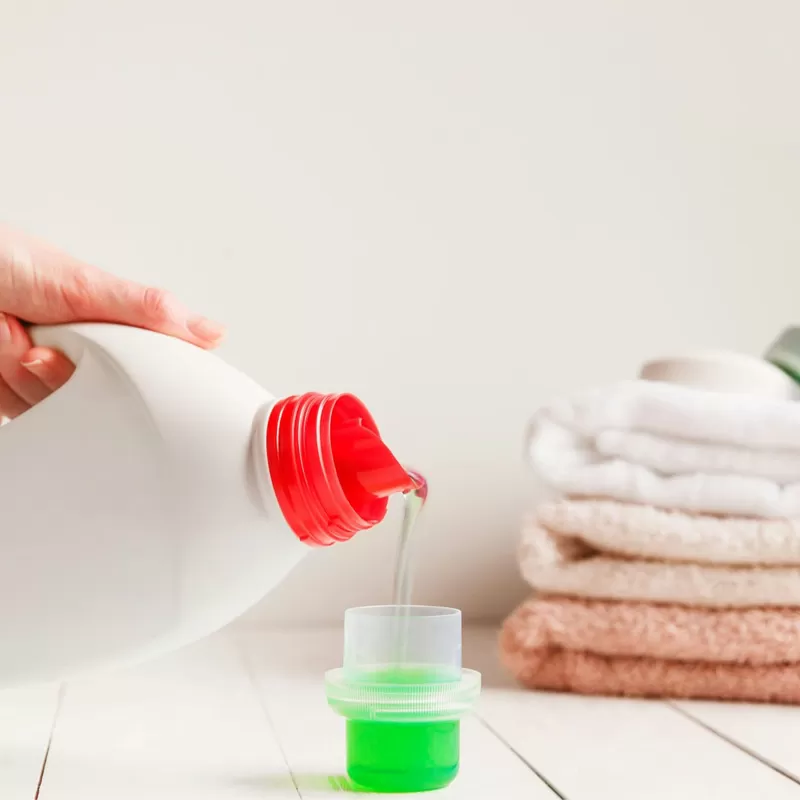
In the global home care and institutional cleaning sectors, consumer preference has shifted decisively toward crystal-clear liquid detergents, dishwashing liquids, laundry gels, and hand sanitizers. However, for product formulation chemists and detergent manufacturers, achieving and maintaining crystal clarity while controlling flow viscosity is a persistent technical challenge.
Common formulation failures include cloudiness and haziness (haze formation) after thickener addition, surfactant precipitation during storage, and gummy agglomeration ("fish eyes") when dry polymer powder dissolves in aqueous surfactant systems.
To overcome these hurdles, specialized detergent grade HPMC (Hydroxypropyl Methylcellulose) has become the industry standard for non-ionic thickening, offering high light transmittance, rapid cold-water dispersion, and stable rheology.
This technical guide explores how to formulate clear liquid detergents while mastering viscosity and clarity using high-purity detergent-grade HPMC.
Formulating transparent liquid soaps and detergents requires balancing multiple conflicting physical parameters:
1. Cloudiness and Reduced Light Transmittance: Standard construction-grade HPMC or low-purity cellulose ethers contain insoluble fibrous residues and high ash content, which scatter light and ruin the crystal-clear appearance required for premium dish soaps and body washes.
2. Surfactant Compatibility & Salt Sensitivity: Anionic surfactants (such as Sodium Lauryl Ether Sulfate / SLES) and amphoteric surfactants (like Cocamidopropyl Betaine / CAPB) interact with thickening agents. Inappropriate thickeners cause phase separation, salting-out, or viscosity drop under high ionic strength.
3. Slow Dissolution & Clumping: When raw polymer powder is added directly to water containing active surfactants, the outer layer hydrates instantly, forming a sticky gel membrane that traps dry powder inside ("fish eyes"), requiring hours of agitation to clear.
Unlike salt-thickened systems (where adding sodium chloride / NaCl only works within a narrow SLES/cocamide DEA surfactant window) or acrylic polymer emulsions (which require precise alkaline neutralization), detergent-grade HPMC delivers robust, independent rheology control.
A. Crystal-Clear Light Transmittance (≥98%)
Detergent-grade HPMC undergoes advanced purification and fractional washing during manufacturing at specialized cellulose ether factories. This eliminates unreacted cotton fibers and insoluble byproducts, ensuring a light transmittance of 98%-99% in a 2% aqueous solution—preserving absolute optical clarity.
B. Broad Surfactant Compatibility
Being a non-ionic polymer, hydroxypropyl methylcellulose does not carry electrical charges that clash with anionic, non-ionic, or amphoteric surfactants. It maintains stable viscosity in formulations containing SLES, LABSA, AES, and APG (Alkyl Polyglucosides) without precipitating.
C. Controlled Pseudoplastic Flow (No Stringy Feel)
Consumers expect dishwashing liquids and hand soaps to pour smoothly without "stringiness" or ropey dripping. Tailored low-to-medium viscosity grades of hpmc polymer provide clean break flow behavior, excellent foam stabilization, and a luxurious skin feel.
To assist detergent R&D chemists in scaling up production, the application laboratory at Hebei Celix Cellulose Co., Ltd. (Celix) recommends the following baseline formulation for high-clarity liquid dishwashing detergent:
Raw Material Component | Active Percentage (% w/w) | Functional Role & Technical Impact |
Deionized Water (DI Water) | Q.S.to 100% | Continuous aqueous base. |
SLES (Sodium Ether Sulfate, 70%) | 12.0%-15.0% | Primary anionic surfactant for detergency and foaming. |
CAPB (Cocamidopropyl Betaine) | 2.0%-4.0% | Amphoteric co-surfactant to boost foam and mildness. |
Alkyl Polyglucoside (APG 0810) | 1.5%-3.0% | Green non-ionic surfactant for grease cutting. |
Celix Detergent Grade HPMC | 0.8%-1.5% | Non-ionic thickener, clarity stabilizer, and foam booster. |
Preservative & Fragrance | q.s. | Microbial stability and sensory appeal. |
Citric Acid (50% solution) | q.s. | Adjust final formula pH to 6.5-7.5. |
To prevent clumping and achieve a crystal-clear, bubble-free finished product, follow this industrial mixing protocol:
1. Pre-Dispersion Method:Disperse the dry hydroxypropyl methlycellulose powder into a small portion of warm water (50℃-60℃) or mix it with liquid surfactants (like glycerin or liquid SLES) before adding total water. This separates individual polymer particles.
2. Cold Water Hydration:Add the pre-dispersed slurry into the main batch of cold deionized water under moderate agitation. As the temperature drops and agitation continues, the surface-treated polymer fully hydrates over 15-20 minutes.
3. Surfactant Addition: Blend in SLES, CAPB, and APG slowly. Avoid high-shear vortex stirring that traps excessive air bubbles.
4. De-aeration & pH Adjustment:Let the clear liquid detergent rest for static de-aeration or apply mild vacuum. Adjust final pH to neutral (6.5-7.0) for optimal skin mildness and viscosity stability.
To ensure compliance and product safety across global export markets, align your detergent manufacturing with established standards:
1. ISO 9001 / ISO 14001 Quality Frameworks: Consult official ISO Management Standards governing chemical production purity and environmental safety.
2. OECD Biodegradability Standards: Verify surfactant and additive biodegradability in accordance with OECD Environmental Guidelines.
3. EU REACH Chemical Compliance: Review ECHA REACH Regulations ensuring safe chemical formulation and export eligibility into European markets.
Formulating high-clarity, stable, premium liquid detergents requires high-purity cellulose ethers with guaranteed light transmittance and batch-to-batch viscosity consistency.
As an international cellulose ether factory and direct HPMC manufacturer, Hebei Celix Cellulose Co., Ltd. (Celix) produces specialized detergent-grade HPMC, HEC, and HEMC engineered specifically for personal care, household cleaning, and industrial liquid detergents. With advanced purification technology and strict quality control, Celix helps global brands achieve crystal clarity and flawless rheology.
Build Better, Build Greener, with Celix HPMC
Clean Safer, Care Smarter, with Celix Cellulose Ether

Drill Deeper, Operate Safer, with Celix Cellulose Ether

Formulate Precisely, Deliver Safely, with Celix Cellulose Ether

Taste Better, Keep Fresher, with Celix Cellulose Ether

Shape Stronger, Fire Smarter, with Celix Cellulose Ether
Contact Us

Celix Cellulose Co., Ltd, is an integrated chemical cellulose manufacturer with in-house R&D, factories, and global sales sites.
Our products include HPMC, HEC, MHEC, VAE RDP, PCE, PVA, Defoamers, PP fibers, HPS, SHP and Gypsum Retarder.


Celix Cellulose Co., Ltd, is an integrated chemical cellulose manufacturer with in-house R&D, factories, and global sales sites.
Our products include HPMC, HEC, MHEC, VAE RDP, PCE, PVA, Defoamers, PP fibers, HPS, SHP and Gypsum Retarder.
Quick Links
+8618330106777
info@celixcellulose.com