EN
EN
 jp
jp  ko
ko  es
es  ru
ru  pt
pt  th
th  ar
ar  vi
vi  id
id  kk
kk 
Construction
Build Better, Build Greener, with Celix HPMC

Water retention is one of the most important performance indicators for cellulose ether in cement-based materials. It directly affects workability, open time, cement hydration, bonding strength, and crack resistance. For manufacturers of dry mix mortar and tile adhesives, accurately testing water retention is essential for product development and quality control.
This article explains how to test the water retention of cellulose ether in cement mortar, what factors influence the results, and how to interpret the data for formulation optimization.
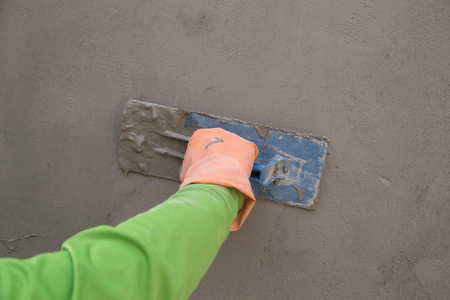
When fresh mortar is applied, water is gradually absorbed by the substrate or lost through evaporation. If moisture disappears too quickly, cement hydration cannot be completed, leading to lower bond strength, poor workability, and surface cracking.
Cellulose ether reduces water migration by forming a protective polymer network within the mortar. Products such as hpmc for cement mortar are specifically designed to improve water retention while maintaining good consistency and application performance.
For this reason, water retention testing has become a standard procedure for evaluating cellulose ether quality before commercial production.
Several laboratory methods are used to evaluate the water retention performance of cellulose ether in cement mortar.
Test Method | Purpose | Typical Application |
Filter Paper Method | Measures water loss under controlled pressure | Routine laboratory comparison |
Vacuum Filtration Method | Evaluates retained water after filtration | Product evaluation |
Standard Cement Mortar Test | Measures water retention in complete mortar formulations | R&D and quality control |
Among these methods, the standard cement mortar test is the most practical because it reflects actual construction conditions and evaluates the interaction between cellulose ether, cement, aggregates, and water.
Reliable testing requires more than selecting a good cellulose ether. Several variables can affect the final water retention value.
These include:
Cement type and fineness
Sand grading and particle distribution
Water-to-cement ratio
Mixing time and speed
Ambient temperature and humidity
Cellulose ether dosage
To compare different products fairly, every variable except the cellulose ether should remain unchanged throughout the experiment.
Higher water retention generally means the mortar can retain moisture longer, allowing cement to hydrate more completely. However, the highest value is not always the best choice.
Excessive water retention may delay setting time and reduce construction efficiency, while insufficient water retention can shorten open time and weaken adhesion.
When developing hpmc for dry mix mortar, manufacturers should balance water retention with workability, viscosity, and application performance rather than optimizing a single parameter.
Laboratory testing combined with practical construction trials provides the most reliable basis for formulation optimization.
Incorrect testing procedures often produce misleading conclusions.
Some common mistakes include:
Using different raw materials between comparison tests
Changing the water dosage during sample preparation
Comparing different viscosity grades without adjusting dosage
Performing tests under inconsistent temperature or humidity
Drawing conclusions from a single test without repeated verification
Following standardized testing procedures and averaging multiple test results can significantly improve data reliability.
Consistent product quality is just as important as accurate laboratory testing.
A professional cellulose ether supplier should provide stable viscosity, moisture content, batch consistency, and technical guidance for different construction applications.
Celix supplies high-quality cellulose ether solutions for cement mortar, tile adhesives, gypsum products, EIFS, and other dry mix building materials. With advanced manufacturing and strict quality control, Celix helps customers achieve stable water retention performance and consistent production quality.
It keeps sufficient moisture available for cement hydration, improving bonding strength, workability, and durability.
The standard cement mortar test is widely used because it simulates actual construction conditions.
No. Water retention depends on the cellulose ether structure, dosage, and overall mortar formulation, not viscosity alone.
Yes. Temperature, humidity, raw materials, and mixing procedures all influence water retention measurements.
Testing helps optimize formulations, compare different cellulose ether grades, and ensure consistent product quality.
Look for suppliers with stable product quality, technical support, consistent batch performance, and experience in construction additives.
Testing the water retention of cellulose ether in cement mortar is essential for evaluating product performance and optimizing mortar formulations. Standardized test methods, controlled laboratory conditions, and careful data interpretation help manufacturers make informed formulation decisions. Rather than focusing on a single property, companies should evaluate water retention together with workability, viscosity, and application performance. By working with an experienced cellulose ether supplier such as Celix, manufacturers can achieve consistent quality and reliable performance across a wide range of cement-based building materials.
Build Better, Build Greener, with Celix HPMC

Clean Safer, Care Smarter, with Celix Cellulose Ether

Drill Deeper, Operate Safer, with Celix Cellulose Ether

Formulate Precisely, Deliver Safely, with Celix Cellulose Ether

Taste Better, Keep Fresher, with Celix Cellulose Ether

Shape Stronger, Fire Smarter, with Celix Cellulose Ether
Contact Us

Celix Cellulose Co., Ltd, is an integrated chemical cellulose manufacturer with in-house R&D, factories, and global sales sites.
Our products include HPMC, HEC, MHEC, VAE RDP, PCE, PVA, Defoamers, PP fibers, HPS, SHP and Gypsum Retarder.


Celix Cellulose Co., Ltd, is an integrated chemical cellulose manufacturer with in-house R&D, factories, and global sales sites.
Our products include HPMC, HEC, MHEC, VAE RDP, PCE, PVA, Defoamers, PP fibers, HPS, SHP and Gypsum Retarder.
Quick Links
+8618330106777
info@celixcellulose.com