EN
EN
 jp
jp  ko
ko  es
es  ru
ru  pt
pt  th
th  ar
ar  vi
vi  id
id  kk
kk 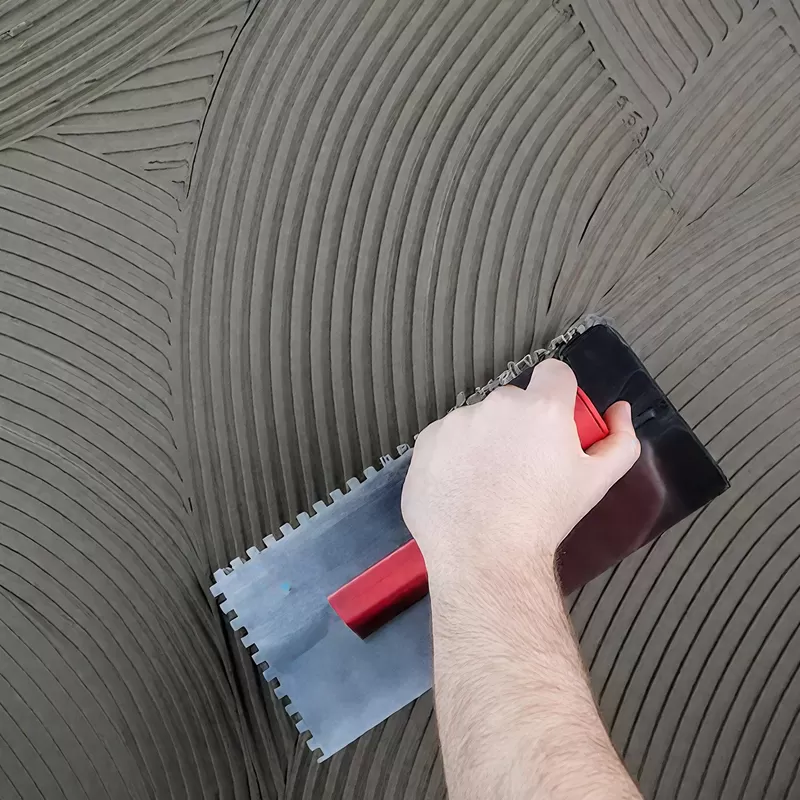
Construction
Build Better, Build Greener, with Celix HPMC

In the modern dry-mix mortar industry, if Cellulose Ether (HPMC/HEMC) is considered the "water retention heart" of the mortar, then Redispersible Polymer Powder (VAE RDP)—specifically VAE RDP—is undoubtedly its "flexible skeleton."
Without RDP, rigid cementitious mortars would crack under thermal stress, fail to adhere to non-porous tiles, and break under shear loads. For technical engineers, dry-mix formulators, and procurement specialists searching for high-performance chemical additives, understanding RDP polymer technology is fundamental to mastering modern mortar performance.
Here is a comprehensive technical guide to VAE RDP Redispersible Polymer Powder, engineered by Celix.
Redispersible Polymer PowderVAE RDP is a free-flowing, organic polymer binder powder obtained through high-temperature spray drying of a liquid latex emulsion. The most widely used polymer base in modern construction chemicals is VAE (Vinyl Acetate-Ethylene) copolymer.
The Manufacturing Process: From Liquid Latex to Free-Flowing Powder
Emulsion Synthesis: Vinyl acetate and ethylene gases are copolymerized under high pressure to form a liquid VAE emulsion. Ethylene acts as an internal plasticizer, giving the polymer inherent flexibility without migrating additives.
Protective Colloid Addition: Polyvinyl Alcohol (PVA) powder is incorporated into the emulsion. PVA wraps around microscopic latex droplets, preventing them from fusing during storage.
Spray Drying: The emulsion is atomized into fine droplets inside a high-temperature spray tower. Water evaporates instantly, leaving dry, free-flowing polymer granules.
Anti-Caking Additive: Mineral anti-caking agents (such as kaolin or calcium carbonate filler) are blended in to ensure the vae powder remains free-flowing in bags without caking.
Step 1 Redispersion: When water is added to dry-mix mortar on site, the protective PVA shell surrounding the RDP dissolves rapidly. The powder reconstitutes back into original liquid polymer latex droplets(1-2μm).
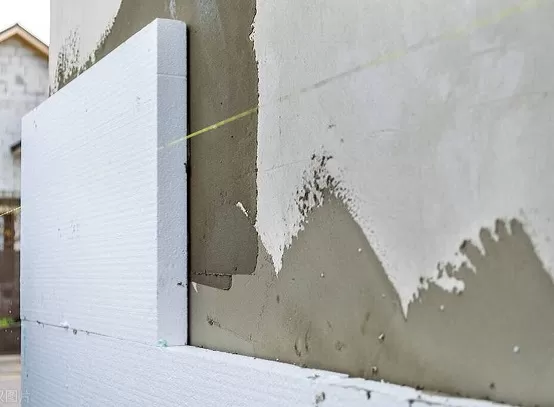
Step 2 Migration & Enrichment: As mortar is troweled, these microscopic polymer particles migrate through capillary channels with water, enriching the critical interface between mortar and substrate (e.g., concrete walls, ceramic tiles, or EPS insulation boards).
Step 3 Polymer Film Formation: As cement hydrates and excess water evaporates, individual latex droplets coalesce into a continuous, flexible 3D polymer network interwoven with hard inorganic cement crystals.
While cement provides compressive strength, adding VAE redispersible powder delivers critical physical upgrades on actual job sites:
Enhanced Tensile Adhesion Strength: Significantly improves bonding onto smooth concrete, hydrophobic insulation boards, and low-absorption porcelain tiles, effectively eliminating hollow tiles, debonding, and peeling.
Superior Flexibility & Crack Resistance: Lowers the dynamic elastic modulus of mortar, enabling it to absorb thermal expansion/contraction and substrate movements. Crucial for exterior wall skim coats and EIFS renders.
High Cohesion, Flexural & Impact Resistance: Increases internal binding force, preventing mortar surface chalking, dusting, or edge crumbling under heavy traffic or physical impact.
Improved Water Resistance, Impermeability & Freeze-Thaw Durability: The continuous polymer film seals capillary pores inside cement matrixes, drastically reducing water absorption and ensuring long-term outdoor weatherability.
Optimized Workability & Anti-Sagging: Enhances mortar thixotropy, improving trowel feel, reducing worker fatigue, and boosting slip resistance for heavy large-format tile installation.
Minimized Shrinkage Cracking Risk: Reduces plastic shrinkage stresses during curing, preventing hairline cracks from forming on large exterior wall surfaces.
Understanding chemical classifications and parameters is vital when sourcing from a cellulose ether factory or polymer supplier:
Main Polymer Classifications
VAE Copolymer Type (Celix Standard RDP): The industry workhorse. Offers exceptional cost-performance balance for tile adhesives, wall putties, skim coats, and interior renders.
VA/VeoVa (Vinyl Acetate / Vinyl Ester of Versatic Acid): Delivers superior alkali resistance, hydrophobic water repellency, and outdoor weatherability. Ideal for exterior insulation systems and highly water-resistant mortars.
Acrylic Polymer Type: Provides top-tier UV resistance and color stability. Used in high-end architectural renders, exterior repair mortars, and specialty coatings (higher raw material cost).
Crucial Technical Parameters Explained
Glass Transition Temperature(Tg):The temperature at which the polymer transitions from a hard, brittle state to a flexible, rubbery state. Lower Tg (e.g.,-15℃ to 0℃)provides higher flexibility and cold-weather crack resistance.
Minimum Film-Forming Temperature (MFFT): The lowest temperature at which the redispersed polymer latex droplets can fuse into a continuous film. If jobsite ambient temperature falls below MFFT, the polymer matrix fails to coalesce, leading to severe loss in bond strength.
RDP plays a vital functional role across diverse dry-mix formulations:
Ceramic Tile Adhesives (CTA - C1 / C2 / S1 / S2 Grades)
Function: Builds flexible polymer bridges across dense tile backings, ensuring high tensile adhesion under dry, wet, and heat-aging conditions.
Recommended Dosage: 0.5% – 4.5% (higher dosage required for C2TE and S1/S2 flexible tile adhesives).
External Insulation Systems (EIFS / ETICS Base Coat & Adhesive)
Function: Binds hydrophobic EPS/XPS insulation boards to masonry walls and absorbs exterior weather shock.
Recommended Dosage: 1.5% – 3.5%.
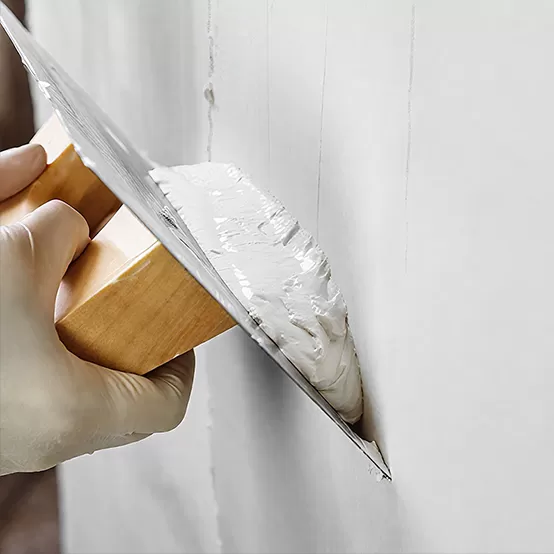
Wall Putty & Skim Coat (Interior & Exterior)
Function: Prevents skim coat cracking, improves adhesion onto concrete, and eliminates surface chalking/peeling under primer paint.
Recommended Dosage: 0.5% – 2.0% (0.5%–1.0% for interior putty; 1.0%–2.0% for exterior water-resistant wall putty).
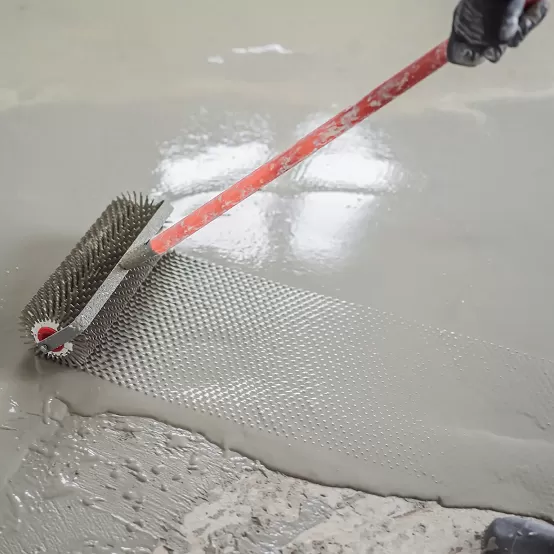
Self-Leveling Underlayments (SLU)
Function: Enhances floor abrasion resistance, prevents aggregate segregation, and increases flexural strength over wooden or tiled subfloors.
Recommended Dosage: 1.5% – 3.0%.
Waterproof Mortars & Tile Grouts
Function: Densifies mortar capillary structures, seals micro-pores, and boosts flexural bonding around tile joints.
Recommended Dosage: 1.0% – 3.0% (hydrophobic VAE or VeoVa modified RDP recommended).
Repair Mortars & Masonry Tile Joint Fillers
Function: Imparts high impact resistance, reduces drying shrinkage, and ensures non-shrinking repair bond to old concrete matrices.
Recommended Dosage: 1.5% – 3.5%.
When evaluating RDP grades for your dry-mix manufacturing plant, focus on three primary parameters:
| Polymer Parameter | Low/Standard Setting | High Setting | Practical Impact on Mortar |
| Glass Transition Temp(Tg) | -15℃to 0℃(Flexible) | >10℃(Rigid) | Lower Tg delivers higher flexibility, cold-weather crack resistance, and EIFS performance. |
| Ash Content (Mineral Filler) | 8%-12% | >15℃ | Lower ash content indicates higher organic polymer purity and superior bond strength. |
| Hydrophobicity Level | Standard VAE | Silane/Silicone Modified | Hydrophobic modified RDP lowers water absorption rate in exterior renders and tile grouts. |
A successful dry-mix mortar depends on balanced chemical additive interaction:
1.RDP vs. HPMC (Cellulose Ether):
RDP governs tensile bond strength, flexibility, 3D film formation, water resistance, and crack prevention.
HPMC governs water retention, thickening, open time, and anti-sagging.
Synergy: They perform complementary functions. RDP cannot replace HPMC's water retention, nor can HPMC provide RDP's flexible film adhesion. Both are non-replaceable essentials in modern mortars.
2.Compatibility with Other Additives:
Starch Ethers (HPS): Synergizes with RDP and HPMC to enhance anti-sagging and lower formulation costs.
Polycarboxylate Superplasticizer (PCE): Fully compatible in self-leveling formulations to boost fluidity without compromising polymer film integrity.
Defoamers & Silicone Hydrophobic Powders: Work seamlessly with RDP in tile grouts and exterior renders to reduce air voids and enhance water repellency.
Avoid these costly mistakes when sourcing and formulating with redispersible powders:
Common Pitfalls:
Myth 1: Judging Quality Solely by Whiteness: High whiteness does not equal high performance. Excess mineral fillers (like calcite or kaolin) can make powder look very white while significantly diluting polymer purity.
Myth 2: "More Dosage Is Always Better": Excessive RDP dosage unnecessarily increases raw material costs and may retard cement setting or cause sticky troweling feel.
Myth 3: Ignoring Application Temperature (MFFT): Applying mortar in freezing temperatures below the polymer's MFFT prevents film formation, rendering the polymer binder ineffective.
Myth 4: Using Caked/Damp RDP: Once RDP absorbs ambient moisture and clumps in bags, its redispersion mechanism fails, leading to severe bond strength loss.
Myth 5: Buying Low-Cost Adulterated RDP: Cheap RDP powders with excessive ash content(>20%) or poor protective colloids may pass initial dry-bond tests, but their wet adhesion and weatherability drop drastically after 30 days.
Quick Quality Evaluation Protocol:
Redispersion Test: Stir RDP in water (1:5 ratio), high-quality powder redisperses rapidly without floating lumps or oily separation.
Film Flexibility Test: Pour redispersed liquid onto glass. After drying, high-grade RDP forms a clear, highly elastic, non-brittle film.
Muffle Furnace Ash Test: Check ash content at 800℃to verify organic polymer purity.
Tensile Bond Testing: Perform pull-off tests (e.g., ASTM C1583) after wet and heat-aging cycles.
Storage Conditions: Store in cool, dry indoor warehouse areas below 30℃.Protect from rain, direct sunlight, and heavy stacking pressure to prevent moisture absorption and caking. Reseal opened bags immediately. Standard shelf life is 12 months.
Construction Temperature: Ensure jobsite application temperature remains above the polymer’s Minimum Film-Forming Temperature (MFFT) (typically>5℃).
Mixing Sequence: Always dry-blend RDP with cement, aggregates, and HPMC powder thoroughly before adding water to ensure uniform dispersion.
Building high-performance, crack-resistant dry-mix mortars requires additives that never compromise on quality. As a leading chemical enterprise, Hebei Celix Cellulose Co., Ltd. (Celix) integrates advanced production technologies with rigorous quality control to deliver consistent VAE Redispersible Polymer Powders (RDP), HPMC, and HEMC to over 50 countries worldwide.
Whether you are optimizing cost-effective skim coats, engineering heavy-duty C2TE tile adhesives, or formulating flexible exterior render systems, the Celix technical lab provides customized raw material solutions backed by reliable supply chain security.
Build Better, Build Greener, with Celix HPMC
Clean Safer, Care Smarter, with Celix Cellulose Ether

Drill Deeper, Operate Safer, with Celix Cellulose Ether

Formulate Precisely, Deliver Safely, with Celix Cellulose Ether

Taste Better, Keep Fresher, with Celix Cellulose Ether

Shape Stronger, Fire Smarter, with Celix Cellulose Ether
Contact Us

Celix Cellulose Co., Ltd, is an integrated chemical cellulose manufacturer with in-house R&D, factories, and global sales sites.
Our products include HPMC, HEC, MHEC, VAE RDP, PCE, PVA, Defoamers, PP fibers, HPS, SHP and Gypsum Retarder.


Celix Cellulose Co., Ltd, is an integrated chemical cellulose manufacturer with in-house R&D, factories, and global sales sites.
Our products include HPMC, HEC, MHEC, VAE RDP, PCE, PVA, Defoamers, PP fibers, HPS, SHP and Gypsum Retarder.
Quick Links
+8618330106777
info@celixcellulose.com