EN
EN
 jp
jp  ko
ko  es
es  ru
ru  pt
pt  th
th  ar
ar  vi
vi  id
id  kk
kk 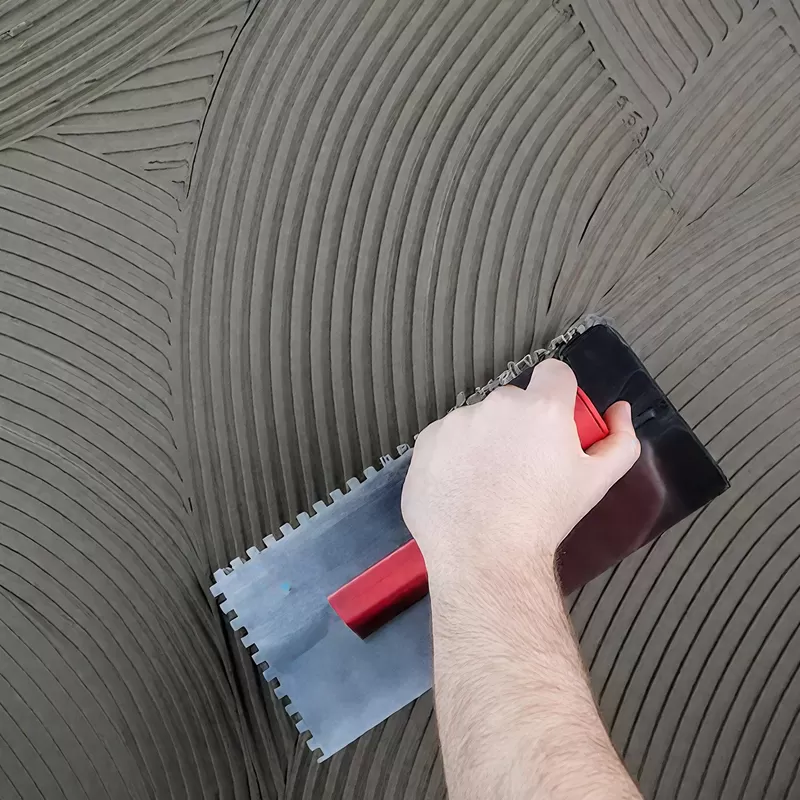
Construction
Build Better, Build Greener, with Celix HPMC

Tile adhesive open time is one of the most important performance factors in modern tiling systems. For manufacturers, contractors, and distributors, the key to better open time is selecting the right HPMC for tile adhesive and balancing water retention, viscosity, and workability in the formulation.
In this guide, Celix HPMC explains three practical formulation strategies to extend open time while maintaining strong bonding, smooth application, and stable performance across different tile installation conditions.
Open time refers to the period after adhesive application during which tiles can still be properly bonded without loss of adhesion performance.
According to the European Standard EN 1346, high-quality tile adhesives should maintain sufficient bonding strength after ≥20–30 minutes of open time exposure under standard conditions (23°C, 50% RH).
However, in real construction environments:
High temperature (30–40°C)
Low humidity (<40%)
Wind exposure
can reduce open time by 30%–60%, causing premature surface drying and weak bonding.
That is where hpmc for tile adhesive becomes essential.
Hydroxypropyl methyl cellulose HPMC improves open time mainly through:
Water retention improvement (reduces rapid evaporation)
Film-forming effect on adhesive surface
Controlled hydration of cement particles
Improved viscosity stability
Typical high-quality HPMC can increase water retention by >95%, significantly delaying surface drying and extending workable time.
Viscosity is the primary lever for balancing water retention and workability.
Medium viscosity (40,000–100,000 mPa·s): Ideal for most standard tile adhesives. Offers excellent open time extension with good flow.
Higher viscosity (100,000–200,000 mPa·s+): Maximizes water retention and open time for hot climates, large tiles, or thick-bed applications, though it may require co-additives for optimal spreadability.
Lower viscosity grades: Suited for faster-setting or highly fluid mixes but provide shorter open time.
Celix PM-65U and PM-75U grades (around 65,000–75,000 mPa·s) are popular choices for versatile performance in HPMC for construction.
Increasing HPMC dosage improves water retention but can increase viscosity too much if not balanced.
Recommended starting points:
Standard C1 adhesive: 0.2–0.3% HPMC.
High-performance C2 adhesive: 0.3–0.5% HPMC + RDP.
Combine with redispersible polymer powder (VAE RDP) for flexibility and adhesion. Celix also offers modified HPMC grades (e.g., PM-Pro series) that incorporate surface treatment for faster dispersion and controlled hydration.
Surface-modified HPMC delays initial hydration slightly for better mixing while delivering superior long-term water retention. This is especially useful in automated production or challenging site conditions.
Modified grades from Celix help achieve:
Longer open time without excessive thickening.
Improved anti-sagging properties.
Consistent performance across temperature variations.
Performance Parameter | Without HPMC | With CELIX HPMC (0.2–0.4%) | Improvement | Technical Explanation |
Open Time | 10–20 min | 30–45+ min | +15–30 min | Delayed water evaporation and hydration control |
Water Retention | 70–85% | 95–99% | +20–25 percentage points | Improved moisture retention during cement hydration |
Tensile Bond Strength | 0.5–0.8 MPa | 1.0–1.5 MPa* | Indirect improvement | Enhanced interface wetting and full hydration (*system-dependent) |
Sag Resistance | Poor–Moderate | Excellent | Significant improvement | Increased yield stress and thixotropy |
Workability | Fair | Excellent | Major improvement | Improved rheology and trowel slip |

Chart Notes:
Values are normalized/representative for easy visual comparison.
Open Time in minutes; Water Retention in %; Bond Strength in MPa; Sag Resistance & Workability on a 1–10 qualitative scale.
Real results vary with formulation, cement type, sand, temperature, and specific HPMC grade (e.g., Celix medium viscosity grades).
Test in your specific climate and with your cement/sand sources.
For hot weather (>30°C), prioritize higher viscosity or modified HPMC.
Monitor pH (ideally 6–8) and ensure proper mixing sequence for full dispersion.
Combine with retarders if ultra-long open time is needed.
As a professional cellulose ether manufacturer, CELIX focuses on:
Stable batch-to-batch HPMC quality
Customized viscosity grades for tile adhesive systems
Global supply for construction chemical industries
Technical formulation support for OEM clients
1. What is the typical open time for standard tile adhesive, and how much can HPMC extend it?
Standard open time is 20–30 minutes. Quality HPMC for tile adhesive can extend it to 30–60 minutes or more, depending on grade and dosage.
2. How does hydroxypropyl methyl cellulose HPMC work to extend open time?
HPMC forms a moisture-retaining film that slows evaporation, keeping the adhesive workable longer and allowing full cement hydration.
3. What is the recommended dosage of HPMC in tile adhesive?
Usually 0.2%–0.5% by dry mix weight. Higher for demanding applications.
4. Is higher viscosity HPMC always better for open time?
Higher viscosity generally provides better water retention and longer open time, but medium viscosities often deliver the best overall balance of workability and performance.
5. Can I use Celix HPMC for both C1 and C2 tile adhesives?
Yes. Celix offers standard and modified HPMC grades optimized for both C1 (basic) and C2 (improved) performance requirements.
6. Where can I get samples or custom HPMC formulations for my tile adhesive?
Contact Celix, a trusted cellulose ether manufacturer, for free samples and technical support tailored to your needs.
Extending tile adhesive open time doesn’t require compromising other properties when you use the right HPMC strategies. By selecting appropriate viscosity grades, optimizing dosage, and choosing high-quality or modified products, formulators can deliver adhesives that perform reliably on site — even under challenging conditions.
At Celix, we specialize in premium HPMC for tile adhesive and other construction applications. Our products help manufacturers create superior mortars that installers trust.
Build Better, Build Greener, with Celix HPMC
Clean Safer, Care Smarter, with Celix Cellulose Ether

Drill Deeper, Operate Safer, with Celix Cellulose Ether

Formulate Precisely, Deliver Safely, with Celix Cellulose Ether

Taste Better, Keep Fresher, with Celix Cellulose Ether

Shape Stronger, Fire Smarter, with Celix Cellulose Ether
Contact Us


Celix Cellulose Co., Ltd, is an integrated chemical cellulose manufacturer with in-house R&D, factories, and global sales sites.
Our products include HPMC, HEC, MHEC, VAE RDP, PCE, PVA, Defoamers, PP fibers, HPS, SHP and Gypsum Retarder.


Celix Cellulose Co., Ltd, is an integrated chemical cellulose manufacturer with in-house R&D, factories, and global sales sites.
Our products include HPMC, HEC, MHEC, VAE RDP, PCE, PVA, Defoamers, PP fibers, HPS, SHP and Gypsum Retarder.
Quick Links
+8618330106777
info@celixcellulose.com