EN
EN
 jp
jp  ko
ko  es
es  ru
ru  pt
pt  th
th  ar
ar  vi
vi  id
id  kk
kk 
Construction
Build Better, Build Greener, with Celix HPMC

When applying interior gypsum plaster, few things are as frustrating as walking onto a job site only to find widespread surface cracking, sagging, or poor surface finish. For building material manufacturers and dry-mix mortar formulators across Europe, Turkey, and Central Asia (such as Kazakhstan and Poland), addressing these application failures is critical to maintaining brand reputation and contractor trust.
Why does gypsum plaster crack, and how can chemical additives like Hydroxypropyl Methylcellulose (HPMC) solve these issues at the formulation level? Let’s break down the 5 most common causes and the key solutions.
The Cause:Gypsum requires a specific amount of water to complete its hydration process (CaSO₄·0.5H₂O+1.5H₂O→CaSO₄·2H₂O). When applied onto highly absorbent substrates (such as aerated concrete or porous brickwork), or during hot, dry weather conditions, the substrate or air rapidly pulls water away from the slurry before hydration finishes. This causes volume shrinkage and micro-cracking.
The Solution: High-Performance Modified HPMC
Water retention is the single most critical factor in preventing dry-shrinkage cracking. High-quality modified HPMC forms a flexible physical network within the gypsum slurry, locking in moisture:
Ensures Complete Hydration: Maintains sufficient moisture within the plaster layer for full crystal development.
Reduces Substrate Absorption: Prevents porous walls from leaching water out of the plaster prematurely.
Formulation Tip: Look for HPMC grades offering water retention values above 98% (DIN/EN standard testing) to withstand high temperatures and porous brick application.
The Cause:If the setting time is too fast, internal stress builds rapidly while the plaster is still being leveled, leading to structural micro-fractures. If it is too slow, the wet weight of the plaster can pull itself down, causing shear strain and surface distortion.
The Solution: Controlled Hydration & Compatibility
Modified HPMC works synergistically with gypsum retarders (such as citric acid or protein-based retarders) and accelerators.
Stable Open Time: Extends the workability window, allowing applicators enough time for screeding and smoothing without disrupting setting dynamics.
Balanced Rheology: Helps maintain consistent internal stress release during the hardening phase.
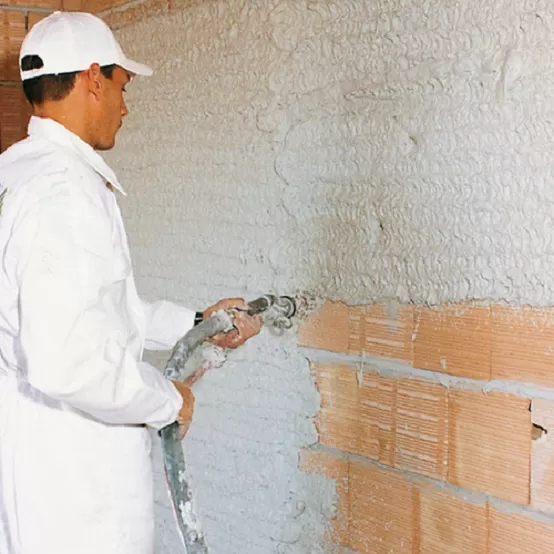
The Cause:With growing labor costs in Turkey, Poland, and Kazakhstan, machine-applied gypsum plaster (spray plaster) is rapidly replacing manual application. However, when spraying thick layers (15–20 mm), low-viscosity or un-modified plaster tends to slide down the wall under gravity, creating cracks at layer boundaries.
The Solution: Modified HPMC Rheology
Celix’s modified HPMC grades for gypsum are specifically engineered with optimized rheological properties:
High Anti-Sagging / Anti-Slump: Delivers high yield stress under static conditions so thick coats stay in place without sagging.
Shear-Thinning Behavior: Lowers viscosity under mechanical pumping pressure for smooth spraying, but rapidly recovers viscosity once applied to the wall.
The Cause:Contractors often add excess water on-site to make the plaster easier to push and level. Excess water creates capillary pores as it evaporates, drastically lowering compressive strength and causing severe drying shrinkage cracks. It can also cause bleed water to rise to the surface, weakening the top skin.
The Solution: Improved Lubrication & Cohesion
Modified HPMC acts as a thickener and plasticizer:
Provides excellent lubrication, allowing high workability even at lower water-to-binder ratios.
Keeps the aggregate and binder homogeneously mixed, preventing bleeding and segregation.
The Cause:If the bond strength between the gypsum plaster coat and the wall substrate is weak, shear forces during drying cause delamination (hollow sound) and map cracking across the surface.
The Solution: Enhanced Interfacial Bond Strength
Cellulose ether increases the wet adhesion (tackiness) of fresh plaster. As the gypsum cures, HPMC maintains interfacial moisture, allowing gypsum crystals to anchor deeply into the capillary structure of the substrate wall.
| Property | Standard HPMC Grade | Celix Modified HPMC for Gypsum |
| Water Retention (20°C / 40°C) | Moderate (92–95%) | High to Ultra-High (98%+) |
| Anti-Sagging Performance | Basic | Superior (Ideal for thick/machine coats) |
| Workability & Smoothing | Standard | Effortless finishing & buttery texture |
| Substrate Compatibility | General | Engineered for aerated concrete, brick & concrete |
| Setting Control | Neutral | Excellent compatibility with retarders |
To eliminate cracking and improve customer satisfaction in competitive markets like Eastern Europe and Central Asia, relying solely on basic cellulose ether is often not enough. Incorporating a tailored, modified HPMC engineered specifically for gypsum plasters guarantees higher water retention, better workability, and long-term crack resistance.
Build Better, Build Greener, with Celix HPMC
Clean Safer, Care Smarter, with Celix Cellulose Ether

Drill Deeper, Operate Safer, with Celix Cellulose Ether

Formulate Precisely, Deliver Safely, with Celix Cellulose Ether

Taste Better, Keep Fresher, with Celix Cellulose Ether

Shape Stronger, Fire Smarter, with Celix Cellulose Ether
Contact Us
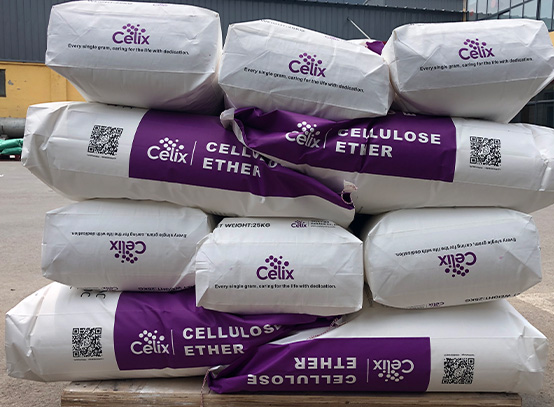
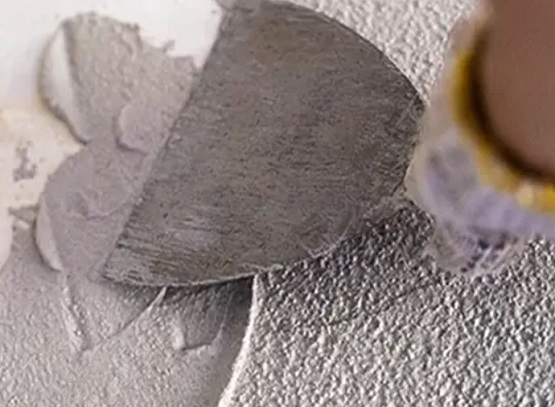

Celix Cellulose Co., Ltd, is an integrated chemical cellulose manufacturer with in-house R&D, factories, and global sales sites.
Our products include HPMC, HEC, MHEC, VAE RDP, PCE, PVA, Defoamers, PP fibers, HPS, SHP and Gypsum Retarder.


Celix Cellulose Co., Ltd, is an integrated chemical cellulose manufacturer with in-house R&D, factories, and global sales sites.
Our products include HPMC, HEC, MHEC, VAE RDP, PCE, PVA, Defoamers, PP fibers, HPS, SHP and Gypsum Retarder.
Quick Links
+8618330106777
info@celixcellulose.com