EN
EN
 jp
jp  ko
ko  es
es  ru
ru  pt
pt  th
th  ar
ar  vi
vi  id
id  kk
kk 
Construction
Build Better, Build Greener, with Celix HPMC

In the global construction chemicals and industrial formulation market, the biggest hidden cost isn't raw material pricing—it's batch-to-batch inconsistency.
A minor variance in cellulose ether viscosity or moisture content can throw off a multi-ton batch of tile adhesive, cause sagging in wall putties, or alter the open time on an active jobsite. For global distributors, formulators, and large-scale mortar plants, finding a reliable manufacturer with ironclad Quality Control (QC) is paramount.
At Hebei Celix Cellulose Co., Ltd. (Celix), quality is not a random checkpoint at the end of the production line; it is an engineered, continuous protocol.
Here is an insider’s view of how our 187-member R&D, production, and QC team leverages modern testing equipment, a full-link traceability framework, and strict international certifications to guarantee that every single bag of Celix HPMC, HEMC, and RDP meets global standard specifications.
Celix operates a closed-loop quality assurance system across three distinct phases of the manufacturing process:
Uncompromising quality begins with raw biomass. Every shipment of refined cotton linters, wood pulp, methyl chloride, and propylene oxide undergoes rigorous lab screening before entering our automated reactors.
Cellulose Purity & Alpha Content: Evaluated to ensure high reactivity and high substitution uniformity.
Moisture & Impurity Limits: Tested to prevent unwanted side reactions during alkalization.
Our 80-ton daily production lines utilize automated sensor grids that continuously monitor temperature, pressure, and reaction kinetics during alkalization and etherification. This real-time telemetry ensures that substitution degrees (DS/MS) remain identical across all continuous cycles.
No bag is dispatched without passing through our modern, on-site analytical laboratory.
To meet international standards (including ISO 9001 and REACH compliance), the Celix QC lab subjects every batch of Hydroxypropyl Methyl Cellulose (HPMC) to a comprehensive battery of tests:
| Quality Metric | Testing Method / Equipment Used | Why It Matters for Your Application |
| Apparent Viscosity | Brookfield RV / NDJ Digital Viscometer (2% aq. solution, 20°C) | Ensures consistent thickening power, sag resistance, and pumpability in mortars. |
| Water Retention | Vacuum Filtration / Standard Mortar Water-Retention Tester | Guarantees extended open time and complete cement hydration, especially in hot climates. |
| Thermal Gelation Point | Thermal Gravimetric & Optical Gel Point Analyzer | Crucial for high-temperature stability (ensuring mortar integrity up to 75°C–90°C). |
| Ash Content (Purity) | Muffle Furnace High-Temp Ignition (800°C) | Lower ash content indicates higher polymer purity and superior optical transparency. |
| Moisture Content | Halogen Moisture Analyzer | Guarantees extended shelf-life and prevents caking during transit and storage. |
| pH Value & Fineness | Digital pH Meter & Standard Mesh Sieves (80–120 mesh) | Ensures neutral chemical behavior and rapid, lump-free dissolution during mixing. |
What happens if a global customer has a technical query three months after delivery? Celix’s Batch Traceability Framework eliminates guesswork.
Unique Batch Coding: Every bag leaving our plant carries a unique, scannable batch code detailing the specific reactor line, manufacturing date, raw material lot, and shift operator.
6-Month Retention Archive: We archive a 500-gram physical retain sample from every single produced batch in a climate-controlled sample bank for at least 6 months.
Instant Re-Testing: If a client requests verification, our QC lab can retrieve the exact archived sample to perform parallel testing against the client's local field results.
Exporting 30,000 tons annually to over 50 countries across South America, Southeast Asia, the Middle East, and Europe requires strict adherence to international regulatory frameworks.
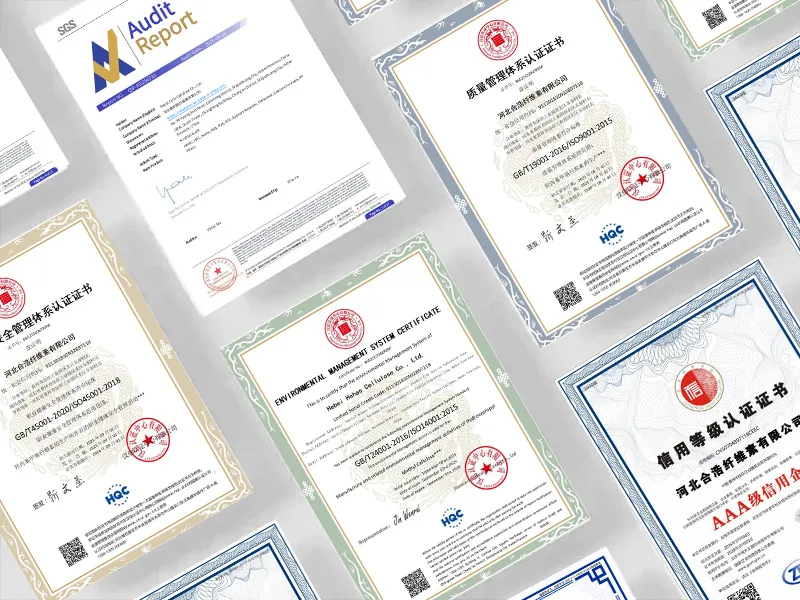
ISO 9001:2015: Quality Management System certification governing all factory workflows.
ISO 14001: Environmental Management System compliance for clean, sustainable chemical manufacturing.
Full SDS & TDS Documentation: Every shipment is accompanied by Globally Harmonized System (GHS) compliant Safety Data Sheets (SDS) and certified Technical Data Sheets (TDS).
Third-Party Inspection Support: We routinely collaborate with international inspection agencies (such as SGS , INTERTEK, and BV) for pre-shipment sampling and testing per client requirements.
When you source cellulose ethers from Celix, you aren't just buying chemical additives—you are investing in supply chain predictability. Supported by an annual capacity of 30,000 tons, an automated production matrix, and 187 dedicated professionals, we make sure that the batch you test in your lab today performs identically to the shipment that arrives at your factory next year.
Are you looking for an OEM or wholesale HPMC/HEMC supplier that guarantees batch consistency?
Build Better, Build Greener, with Celix HPMC

Clean Safer, Care Smarter, with Celix Cellulose Ether

Drill Deeper, Operate Safer, with Celix Cellulose Ether

Formulate Precisely, Deliver Safely, with Celix Cellulose Ether

Taste Better, Keep Fresher, with Celix Cellulose Ether

Shape Stronger, Fire Smarter, with Celix Cellulose Ether
Contact Us


Celix Cellulose Co., Ltd, is an integrated chemical cellulose manufacturer with in-house R&D, factories, and global sales sites.
Our products include HPMC, HEC, MHEC, VAE RDP, PCE, PVA, Defoamers, PP fibers, HPS, SHP and Gypsum Retarder.


Celix Cellulose Co., Ltd, is an integrated chemical cellulose manufacturer with in-house R&D, factories, and global sales sites.
Our products include HPMC, HEC, MHEC, VAE RDP, PCE, PVA, Defoamers, PP fibers, HPS, SHP and Gypsum Retarder.
Quick Links
+8618330106777
info@celixcellulose.com